By John P. Caucutt, Attorney Serving Southern Wisconsin
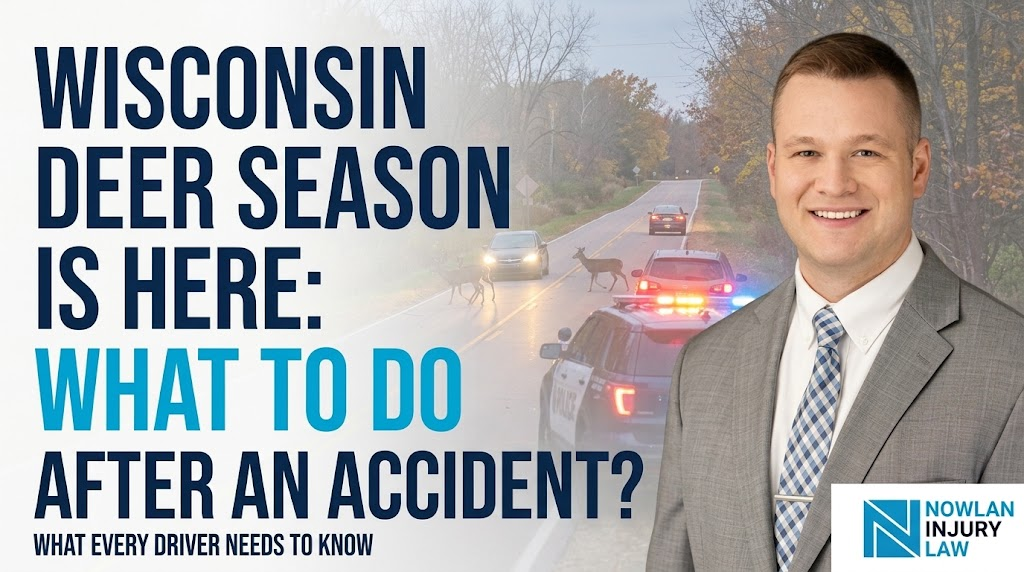
As the autumn leaves turn across Wisconsin, local drivers know that October marks the beginning of peak deer activity statewide. From rural backroads in Walworth and Jefferson Counties to busy stretches of I-94 through Waukesha and Milwaukee, the annual rut brings a sharp rise in deer-vehicle collisions.
According to the Wisconsin Department of Transportation, thousands of deer-related crashes occur across our state every fall. While many result only in property damage, others lead to severe physical injuries, multi-vehicle pileups, and complex insurance claims.
If you hit a deer on Wisconsin roads this season, knowing the right steps to take immediately after the crash can protect both your physical safety and your legal rights.
Immediate Steps After Hitting a Deer
The moments following an impact can be disorienting, but taking systematic action is essential for your safety and any future claims:
- Pull Over Safely:Move your vehicle off the road, activate your hazard lights, and stay inside your car if you are on a busy highway or rural road with low visibility.
- Never Approach an Injured Animal:A frightened, injured deer can cause severe physical harm with its hooves and antlers.
- Call Local Law Enforcement:Report the incident to the local sheriff’s department, state patrol, or local police. In Wisconsin, law enforcement documentation creates an official record of the time, location, and conditions of the crash.
- Document the Scene:Take detailed photographs of your vehicle’s damage, the surrounding roadway, skid marks, and any visible injuries.
- Seek Prompt Medical Attention:Adrenaline often masks symptoms of whiplash, concussions, or internal trauma. Seeing a doctor immediately ensures your health is protected and creates a direct medical record linking your injuries to the accident. If you’ve been hurt, speaking with an experienced Wisconsin personal injury attorney can help you understand your legal options.
Navigating Insurance Claims: Comprehensive vs. Collision Coverage
Many drivers assume that hitting an animal is covered under standard auto liability insurance, but that is rarely the case:
- Comprehensive Coverage:Hitting a deer directly is generally classified as a “missile” or animal-strike incident under the comprehensive section of your auto policy.
- Swerving into an Obstacle:If you swerve to avoid a deer and strike a guardrail, tree, or ditch, insurance companies typically classify this as an at-fault single-vehicle accident under your collision coverage.
- Handling Insurance Adjusters:Big insurance companies often attempt to minimize payouts or mischaracterize how an accident occurred to reduce their financial liability. Having dedicated legal representation ensures your claim is evaluated fairly and completely.
When Another Driver’s Negligence Is Actually to Blame
While a deer springing onto the roadway is an act of nature, not every deer-related collision is a simple single-vehicle incident. In many autumn crashes, another driver’s negligence turns an avoidable situation into a multi-car collision.
You may have grounds to hold another party accountable if:
- A Driver Following Too Closely Rear-Ends You:If you stop or slow down safely for a deer and a tailgating driver strikes your vehicle from behind.
- An Oncoming Driver Swerves into Your Lane:If an oncoming driver panics, swerves out of their lane to avoid a deer, and hits your vehicle head-on or side-swipes you.
- A Distracted or Speeding Driver Fails to Stop:Drivers who are texting, speeding, or driving recklessly fail to react appropriately to changing traffic patterns caused by wildlife on the road.
In these scenarios, your recovery is not limited to animal-strike coverage. You may be entitled to full compensation from the at-fault driver’s liability policy for medical bills, lost wages, pain and suffering, and property damage. If another driver caused your crash, our firm provides aggressive representation for victims of motor vehicle accidents to fight for the compensation you deserve.
Uninsured Motorist Coverage and Multi-Vehicle Crash Complications
If an at-fault driver causes a crash while swerving or stopping and flees the scene, or if they do not carry adequate insurance, your policy’s Uninsured Motorist (UM) or Underinsured Motorist (UIM) coverage may come into play.
Insurance policy language can be dense and confusing, especially when multiple vehicles and insurance carriers are involved. Big insurance companies count on injured drivers settling quickly before understanding the full extent of their long-term medical needs. Standing up to these corporations requires aggressive, skilled advocacy to ensure your rights are protected every step of the way.
Protecting Wisconsin Drivers and Their Families
Navigating the legal and financial aftermath of a serious roadway accident should never be something you have to handle alone. Whether your crash involved a direct animal strike or another motorist’s reckless driving, getting clear, compassionate legal advice allows you to focus on healing.
If you or a loved one has been injured in a collision on Wisconsin roads this season, reach out to our legal team today for a free, confidential case evaluation. Learn more about how we fight for injured individuals by visiting our law firm page to see our commitment to standing up to big insurance companies on your behalf.
About Attorney John P. Caucutt
Attorney John P. Caucutt is dedicated to helping injured individuals navigate the aftermath of serious accidents and takes pride in standing up to big insurance companies to fight for the justice and compensation his clients deserve. Raised in Oconomowoc, John graduated cum laude from Marquette University Law School, where he was inducted into the Marquette Pro Bono Honor Society. He resides in Whitewater, Wisconsin, and serves on the Board of Directors for United Way of Jefferson & North Walworth Counties.