Author: Maddie Lynch, Paralegal, Nowlan Injury Law
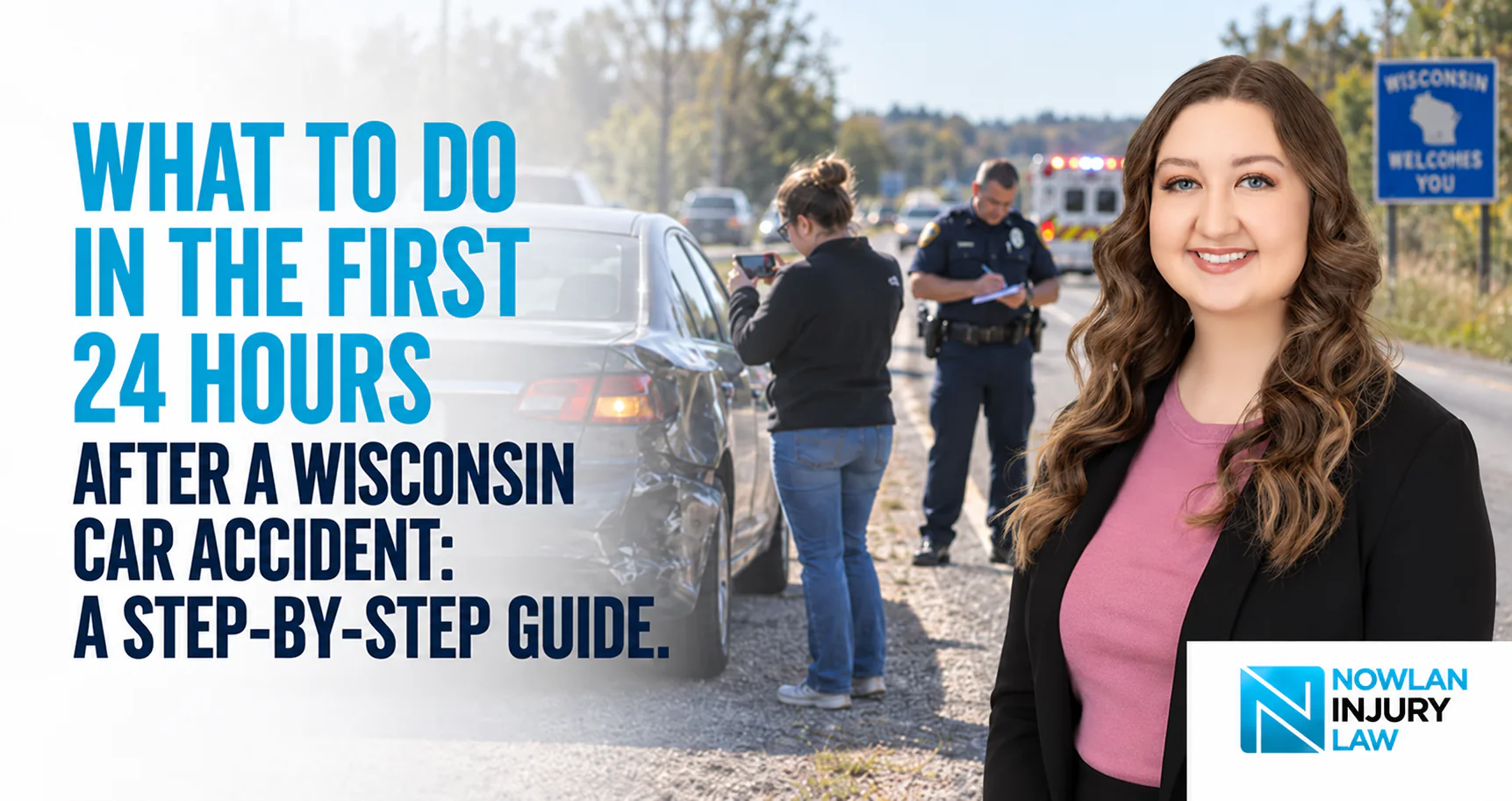
The moments after a car accident are disorienting. Your adrenaline spikes, other drivers may be upset, and you may not even know how badly you or your passengers are hurt. What you do and what you document in the first 24 hours after a crash can have a significant impact on your ability to recover full compensation for your injuries.
This guide walks you through every step, in order, so you know exactly what to do if you are ever in this situation on a Wisconsin road.
Step 1: Stop and Stay at the Scene
Wisconsin law requires all drivers involved in an accident to remain at the scene. Leaving, even if you believe you were not at fault, can result in criminal charges for hit-and-run, even if no one was injured. If you can do so without obstructing traffic, pull your vehicle to a safe location, turn on your hazard lights, and stay put until law enforcement arrives and releases you.
Step 2: Check for Injuries and Call 911
First, check yourself, your passengers, and anyone else involved in the crash. Do not attempt to move anyone who may have a neck or spinal injury unless they are in immediate danger, such as from fire or oncoming traffic.
Call 911 immediately. This matters for two reasons: it gets emergency medical help on the way if anyone is hurt, and it ensures law enforcement comes to the scene to write an official accident report. That report becomes critical evidence in any personal injury claim.
Under Wisconsin law, you must report any accident that results in injury, death, or property damage that appears to exceed $1,000. When in doubt, call.
Step 3: Document the Scene Thoroughly
If you can do so safely, use your phone to document as much as possible before moving vehicles or clearing the scene. Capture the following:
- The position of all vehicles before they are moved
- Damage to every vehicle involved
- Skid marks, debris, or road conditions that may have contributed to the crash
- Traffic signs, signals, or lane markings in the area
- Any visible injuries to yourself or others
- The surrounding environment, including weather and lighting conditions
- The license plates of all vehicles
Photographs and video taken immediately after a crash are often the most compelling evidence for your attorney and insurance company. Do not skip this step.
Step 4: Exchange Information With the Other Driver
Collect the following information from every driver involved:
- Full legal name
- Home address
- Phone number
- Driver’s license number
- License plate number
- Insurance company name and policy number
- Vehicle make, model, and year
If witnesses, bystanders, pedestrians, or other motorists stopped, ask for their names and phone numbers as well. Witness accounts can be decisive in disputed-liability cases.
Do not discuss fault with the other driver. Avoid saying “I’m sorry” or any statement that could be interpreted as an admission of responsibility. Wisconsin follows a modified comparative fault rule, meaning your compensation can be reduced or eliminated based on your percentage of fault in the accident. Statements made at the scene can and do come back to hurt injured victims.
Step 5: Cooperate With Law Enforcement
When the responding officer arrives, answer their questions honestly and accurately. Describe what happened from your perspective without speculating about fault or minimizing your injuries. If you are not sure whether you are hurt, say so; do not tell the officer you are “fine” if you have any doubt.
Before leaving the scene, ask the officer for the incident report number. You will need it to get a copy of the official accident report, which the Wisconsin Department of Transportation or the responding law enforcement agency typically makes available within a few days of the crash.
Step 6: Seek Medical Attention Even If You Feel Okay
This is one of the most important steps, and one of the most commonly skipped.
Many serious injuries, including whiplash, concussion, traumatic brain injury, internal bleeding, and soft-tissue damage to the neck, back, and shoulder, do not produce obvious symptoms immediately after a crash. The adrenaline response that kicks in during a traumatic event can mask pain for hours, or even days.
Going to the emergency room or an urgent care clinic the same day as your accident creates a medical record that connects your injuries directly to the crash. Waiting several days before seeking care gives insurance adjusters an opening to argue that your injuries weren’t caused by the accident or aren’t as serious as you claim.
If you didn’t call emergency services, or if paramedics cleared you at the scene, go on your own. Tell the treating provider that you were in a car accident. Describe every symptom, even ones that seem minor. Follow all medical recommendations and keep every appointment.
Step 7: Notify Your Insurance Company
Report the accident to your own insurance company as soon as possible, ideally the same day. Most policies require prompt accident notification as a condition of coverage.
You are not required to provide a recorded statement to the other driver’s insurance company, and you should not do so without speaking with an attorney first. Insurance adjusters are trained to ask questions in ways that can minimize your claim. A recorded statement made in the first 24 hours, before you fully understand the extent of your injuries, can significantly damage your case.
Step 8: Preserve All Evidence
In the days following the accident, gather and organize everything related to the crash:
- Your copy of the police report
- All medical records and bills
- Photos and video from the scene
- Communications with insurance companies (keep written records of phone calls)
- Any correspondence from the other driver or their insurer
- Receipts for out-of-pocket expenses related to your injuries, such as prescriptions, medical equipment, or transportation to appointments
Do not repair your vehicle until your attorney or an independent appraiser has inspected and documented it. Vehicle damage is part of the evidence record.
Step 9: Contact a Wisconsin Personal Injury Attorney
Wisconsin’s statute of limitations for personal injury claims arising from car accidents is generally three years from the date of the crash. While three years may seem like a generous window, the strongest cases are built from evidence gathered early; witness memories fade, surveillance footage is overwritten, and physical evidence disappears.
An experienced personal injury attorney can protect your rights from the very beginning. They can communicate with insurance companies on your behalf, preserve all evidence, identify every source of available compensation, and advise you on your claim’s true value before you agree to any settlement.
At Nowlan Injury Law, we come to you anywhere in Wisconsin. We are available around the clock because accidents don’t happen on a schedule, and your first steps toward recovery shouldn’t be delayed by geography or business hours. We don’t charge a fee unless we recover for you.
The 24-Hour Checklist
Here is a quick reference for everything covered above:
- Stay at the scene
- Call 911 and request medical help if needed
- Photograph and video the scene before vehicles are moved
- Exchange information with all drivers and collect witness contacts
- Cooperate with law enforcement; request the incident report number
- Seek medical attention the same day; do not wait for symptoms
- Notify your own insurance company
- Preserve all evidence and records
- Contact a personal injury attorney before speaking with the other driver’s insurance company.
You Do Not Have to Navigate This Alone
A car accident can upend your life in an instant. Medical bills, lost income, physical pain, and insurance negotiations create a level of stress that no injured person should have to manage without experienced guidance.
If you or a family member has been injured in a Wisconsin car accident, the team at Nowlan Injury Law is ready to help. Call us today for a free consultation.
Nowlan Injury Law serves injured clients throughout Wisconsin, with offices in Beloit and Sun Prairie.