Author: John Caucutt | Nowlan Injury Law
The weekend getaway marks the unofficial end of summer in Wisconsin: cookouts, lake trips, and long drives across the state. Families pack up cars and head to the lake, friends gather for backyard celebrations, and traffic on Wisconsin highways swells well above normal. It also marks one of the most dangerous stretches of the year on our roads. More vehicles on the highway, driver fatigue from holiday travel, alcohol at celebrations, and distracted drivers all combine to make holiday weekends a prime time for serious accidents.
According to national traffic safety data, holiday weekends consistently see spikes in fatal and injury-causing crashes, and weekend getaway is no exception. Drunk driving incidents rise sharply. Long-distance travel leads to fatigued driving. Heavy traffic, combined with impatient, distracted drivers, creates conditions where collisions happen in an instant.
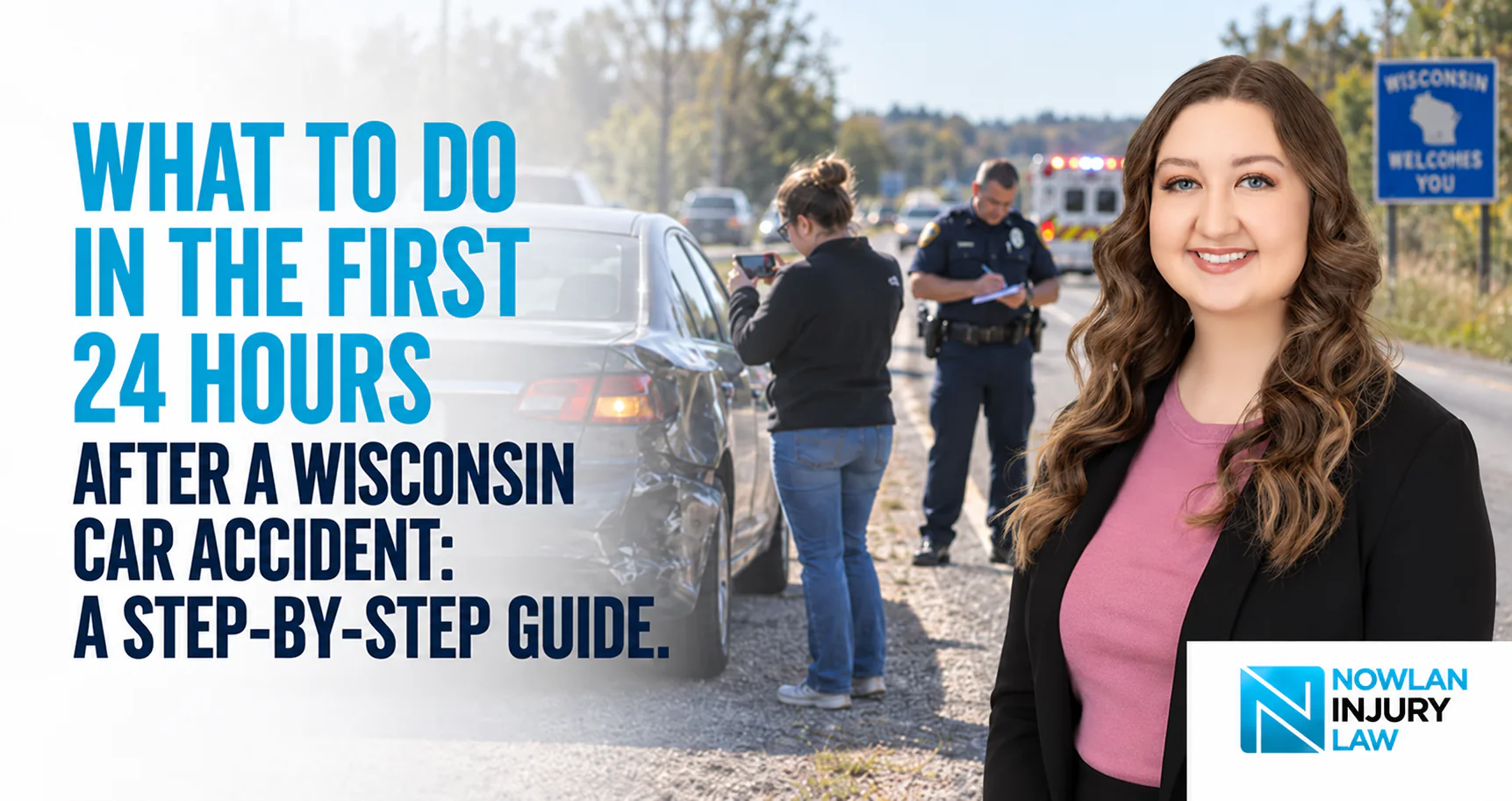
If you or someone you love was injured in a car accident over holiday weekend, the days immediately following the crash are critical. Here is what you need to know and what you should do right now
Seek Medical Attention Immediately Even If You Feel Fine
After a collision, adrenaline floods your body and can mask significant pain. Injuries like whiplash, concussions, and soft tissue damage to the neck, back, or shoulder often do not become fully apparent until hours or even days after the accident. Spinal injuries can start as soreness and worsen dramatically within 48 to 72 hours. Traumatic brain injuries can begin with mild symptoms headache, fogginess, irritability before escalating.
A medical evaluation creates an official record linking your injuries to the crash, which is essential to any future injury claim. Even if you feel mostly fine, a physician can identify injuries you may not be aware of and document your condition at a specific point in time.
Do not wait. If a doctor has not already seen you, make an appointment today. The gap between your accident and your first medical visit can be used against you by insurance companies to argue that your injuries were not serious or that they were caused by something else entirely.
Report the Accident
Wisconsin law requires you to report accidents involving injury, death, or significant property damage to law enforcement. If you didn’t file a police report at the scene, contact the appropriate agency now. The official report documents the facts of the crash, identifies the parties involved, and serves as a foundational piece of evidence in your case. It can establish fault, confirm alcohol or other impairments, and document road and weather conditions at the time of the crash.
Document Everything You Can
Gather and preserve as much information as possible:
- Photographs of the accident scene, vehicle damage, road conditions, skid marks, and any visible injuries
- Contact information for all drivers, passengers, and witnesses
- A written account of what happened, recorded while the details are still fresh
- All medical records, bills, and treatment notes from every provider you see
- Any communications from insurance companies, including texts, emails, and letters
- Records of missed work, lost wages, and any other expenses connected to your injuries
Evidence disappears quickly. Skid marks fade. Witnesses move on. Security footage gets overwritten within days. Physical damage gets repaired. The steps you take in the immediate aftermath of your accident can make or break your ability to recover what you are owed.
Be Careful What You Say to Insurance Companies
Insurance adjusters may contact you within days of the accident, sometimes within hours of filing a claim. They are trained professionals whose goal is to limit the amount their company pays out. They are not on your side.
Do not give a recorded statement. Do not accept a settlement offer. Do not sign any release without first speaking with a personal injury attorney. Adjusters may use friendly, casual language to put you at ease, but they note everything you say and can use it to minimize your claim.
An early settlement offer may sound reasonable in the moment. Still, it rarely accounts for the full extent of your injuries, future medical costs, ongoing rehabilitation, lost wages, or the long-term impact on your quality of life. Once you accept and sign a release, you give up your right to seek further compensation even if your condition worsens significantly.
Understand What It Takes to Bring a Personal Injury Claim in Wisconsin
A successful personal injury case in Wisconsin requires proving three things:
- The other party was negligent: they failed to act with reasonable care on the road.
- That negligence directly caused the accident and your injuries.
- Your injuries resulted in provable damages: medical expenses, lost income, pain and suffering, and more.
Holiday weekend crashes often involve clear-cut negligence: drunk driving, distracted driving, speeding, failure to yield, or running a red light. If another driver’s reckless or careless behavior put you in the hospital, you have the right to hold them accountable. Wisconsin operates under a modified comparative negligence rule, meaning you can still recover damages even if you were partially at fault as long as your share of fault does not exceed 51 percent.
Know the Wisconsin Statute of Limitations
Wisconsin gives injured accident victims three years from the date of the crash to file a personal injury lawsuit. Three years can seem like a long time, but evidence erodes, witnesses become harder to locate, and building a thorough, well-documented case takes time. Acting quickly gives your attorney the best opportunity to gather evidence, preserve witness accounts, and build the strongest possible case on your behalf.
Common Injuries We Handle After Holiday Weekend Car Accidents
Holiday weekend crashes can produce a wide range of serious injuries. Some of the most common we see include:
- Neck and back injuries
- Whiplash
- Spinal cord injuries
- Traumatic brain injuries and concussions
- Shoulder and rotator cuff damage
- Broken and fractured bones
- Rib injuries
- Head injuries
- Paralysis
Many of these injuries require long-term treatment, surgery, or extensive rehabilitation. The financial and personal toll can be staggering. Medical bills pile up, time away from work stretches on, and the emotional weight of recovery takes its own toll on families. You deserve to have that burden addressed, not absorbed quietly while the responsible party faces no consequences.
You Do Not Have to Face This Alone
At Nowlan Injury Law, we have spent over five decades fighting for injured Wisconsin families, recovering more than $86 million on their behalf. We understand that a serious accident changes everything: your health, your ability to work, and your family’s sense of security.
We come to you. Wherever you are in Wisconsin Madison, Janesville, Beloit, Sun Prairie, or anywhere across the state our team will meet you where you are. You will never have to wonder where your case stands. We provide proactive updates at every stage, and our team is available around the clock, seven days a week. We are trial-ready from day one, which means insurance companies know we mean business at the negotiating table.
We work on a contingency fee basis. That means you pay nothing unless we win.
Take the First Step Today
The days following a car accident are not the time to wait and see. They are the time to act to protect your health, your rights, and your future.
Contact Nowlan Injury Law today for a free consultation. No obligation, no upfront cost, and no fee unless we recover for you. Tell us what happened. Let us take it from there.
About the Author
Attorney John Caucutt is dedicated to helping injured individuals navigate the aftermath of their injuries and takes pride in standing up to big insurance companies to fight for the justice and compensation clients deserve. John grew up in Oconomowoc, Wisconsin. He graduated cum laude from Carroll University in Waukesha with a bachelor’s degree in biology and a minor in biochemistry. He earned his law degree cum laude from Marquette University Law School, where he made the Dean’s List four times and was inducted into the Marquette Pro Bono Honor Society. John lives in Whitewater, Wisconsin, and serves on the Board of Directors for United Way of Jefferson and North Walworth Counties.